
by admin | Apr 11, 2021 | Blog
Natural food color is quite dominant in plants, minerals, vegetables, fruits, and other edible natural products.
Natural food color is free from compounds such as glycerin, and costlier. These compounds are commonly found in synthetic colors and their toxins are harmful to human health.
Food colors are sold in smaller quantities in small dropper bottles. The colors can also be obtained in bulk also. Natural organic colorants are useful to individuals with allergic reactions to artificial and synthetic food coloring.
The colorants are safe, easy to make, and work as organic colorants with little to no effects on your health. Moreover, adding color to food is ideal as it makes food products look more attractive and appealing to taste.
Natural food colors are essential in preserving food color, in order to manipulate consumers’ sensory perception.
Benefits of using natural food colors
Organic
colorants come with incredible amounts of nutrients beneficial to your health.
Spirulina, for example, is used as a natural blue food color that contains multiple essential minerals. Calcium, Iron, B vitamins, and Magnesium are some of these minerals that help keep the endocrine system in check.
The blue food coloring, obtained from spirulina, is also a high source of protein. The food dye also contains anti-inflammatory properties, which help reduce inflammation, and sometimes pain.
According to King Arthur Flour‘s renowned baker and a big proponent of natural food coloring, Susan Reid, naturally occurring foods and spices have tons of nutritive value.
A number of fruits and spices used to make food colors have tremendous health benefits.
- Wheat grass has amino acids, vitamins and iron
- Calcium, vitamins and folate can easily be obtained from spinach.
- Berries contain phytochemicals, vitamins and folic acid as well.
- There are tons of health benefits surrounding turmeric. The spice has anti-inflammatory properties, and slows cancer metastasis. Moreover, turmeric helps with a range of dermatological diseases.
Nailing the right shade in your food
Common spices, fruits, and vegetables can be used to extract natural food colors. This makes is quite easy to obtain ingredients required.
To get a natural red or pink color, you can use beet powder or freeze-dried berries. Pomegranate juice also works just as well.
For a
yellow pigment, you can use ground turmeric. You can use blueberry juice or
powder to acquire a blue shade as well.
For a green
pigment, you can use spirulina, spinach powder, or chlorella.
Carrot juice or powder will help you obtain an orange pigment. Also, you can use paprika, saffron, fruit juices, and carmine to obtain the desired hue.
Finally
It is important to note that despite the numerous benefits of natural food colors, just be careful not to use too much.
Food
colorants also provide pigments, flavoring, essential vitamins, and organic
acids as well. Thus, the next time you want to add a bit more color to your
dish, natural food colorants are the way to go.
by admin | Apr 3, 2021 | Bamboo Charcoal, Blog
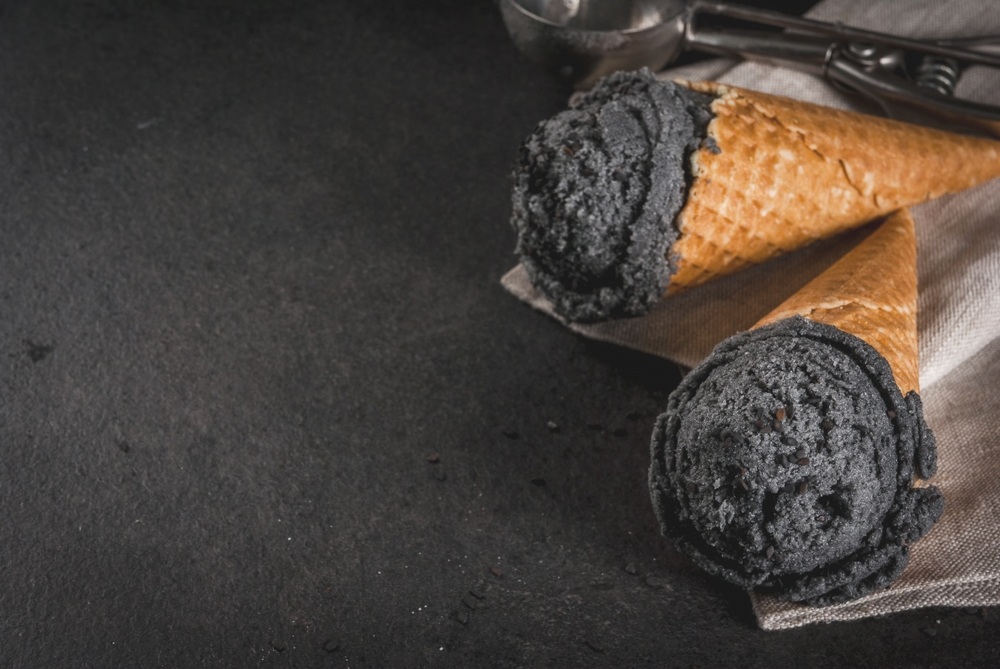
You may have seen pictures of vegetable black ice cream online and wondered how they are made – and what makes them seemingly dark in color. Carbon-labelled foods and ice creams have been around for some time now.
Famous black ice cream shops like Morgenstern’s have been trending on social media for their prowess in making unique, relatively rare, dark tinted ice creams.
We will guide you through the process of making DIY vegan
carbon ice cream and also help you understand the benefits of consuming
activated charcoal.
Making Vegetable Black Ice Cream
The process of making a vegetable carbon ice-cream is quite simple and should only take 30 minutes of your time.
To make this desert, you’ll need the following ingredients:
- 2 cups of cream
- 1/2 cup of coconut ash (activated charcoal)
- 2 tablespoons of zest (preferably lemon)
- 850ml of coconut condensed milk
- 2 tablespoons lemon juice
- 2 tablespoons of vanilla extract (or any other flavor of your choice)
Once you have your ingredients ready, follow these 4 easy steps:
- Add both activated charcoal (1/4 cup) and cream to a glass or metallic bowl. Beat until foamy and set the mixture aside
- Using a separate bowl, mix both lemon juice and condensed milk. Add the desired amount of lemon zest. To increase the “lemon flavor”, add more zest.
- Add vanilla extract and the remaining coconut ash (1/4 cup) into the mixture in step 2. Mix well.
- In equal proportions, add both mixtures into a loaf pan and freeze overnight.
There you have it! Best vegetable black ice cream there is.
Why consider having vegetable carbon ice-cream in your diet?
Before being incorporated into our foods, activated charcoal was added to juices and lemonades by detox enthusiasts.
According to a research by Elisa Goodman, whose developed detox plans for celebrities including Kate Hudson, says carbon based foods bind and trap toxins before being absorbed into the body.
Besides, if you want to make water safe for drinking, add activated charcoal in filtration systems to help remove toxic mold spores.
Moreover, coconut ash has been touted to have anti-ageing properties and is one of the main ingredients in weight loss supplements.
Activated charcoal is used to reduce gastrointestinal problems and draw venom from wounds due to its strong carbon-binding properties.
In Conclusion
Despite the numerous benefits of activated charcoal, it is important to note that excessive consumption could lead to undesirable health effects.
Always remember to add coconut ash (activated charcoal) in controlled amounts especially since it affects absorption of some medication.
However, since the amount that goes into each ice-cream
serving isn’t great enough, it is safe trying out the all famous vegan carbon
ice-cream.
At Santacolor, we provide one of the best vegetable carbon black on the market that assures you of a rich, intense black color that easily mixes with any processed or self-made foods.
Contact us for a quote!
by admin | Jan 23, 2021 | Blog, Monascus Red Color
Monascus Red color refers t the Red yeast rice. These are the pigments. The best way to obtain is a fungus. It refers to Red koji rice. Some common names are Red Yeast Rice Pigment, A Red koji Rice, Monascorubrin, Rice Kernel Discoloration, Maize Silage Mould, and corn Silage Mould.
Monascus red color has a long history for its use in China as a big source of natural color. The color is the best usage in food in china for many centuries. It was an important ingredient in beverages. It was a flavored component. Monascus red color has vital importance to use in Chinese medicine. It had a long history in Chinese herbology. It is perfect for usage in curing the stomach. China is the world’s largest country in its production. The use of it is increasing day-by-day with its increasing demand in China. It uses by the people in China. The Chinese people demand it more and more.
U.S. FDA P over Position over Monascus Red
The U.S. FDA position is that red yeast rice items that contain monacolin K are indistinguishable to a medicine medicate and, in this way, subject to control as a medicate. In 1998, the FDA started an activity to boycott an item (Cholestin) containing red yeast rice extricate. The U.S. District Court in Utah ruled in favor of permitting the item to be sold without confinement. Monascus red color had its use in the history of the united state. In the USA, it is used in food. European Union used color in food and many other applications.
European Union Stance over Monascus Red
The European Union food and drug administration banned the use of the monascus red color. They said that it contains harmful components. These components affect human health. European Union FDA said that the color contains the monacolin k which were identical to the prescript drug. The European Union food and drug administration banned the use of it. At that time, it considers a harmful agent to health. People should avoid their use.
European Food Safety Authority Board on Monascus Red
The European Food Safety Authority (EFSA) Board on Food Additives added to food. It concluded, red yeast rice arrangements contained monacolins. The Board was incapable to recognize any addition that it seems to consider as secure. The reason given was case ponder reports of extreme antagonistic responses to items containing monacolins at a very low amount of 3 mg/day. Red yeast rice suggests amid pregnancy or breast-feeding.
Indian Stance & Trends on Monascus Red
The food and drug administration of India has been alarming the people to not use it. They said that little quantity of color has not a bad effect on the body. The increasing amount increases the risk of the diseases. Monascus red has a long history of use in India. These widely used in Maharashtra. Hindus used the color for different purposes.
It uses in Asian countries for many centuries as a natural source of colors. It uses in beverages in Asian countries.
A Historical American Development on Monascus Red
In 1998 food and drug administration take a step to ban it. FDA banned the products that contain the monascus red pigment. They ran the campaign to avoid the use of the monascus red color. The U.S district court favors its use without any restriction. They said that it is not harmful. These colors can use by humans. These colors have vital importance in our long history. In 2001 in the U.S Court of Appeals it became a reserved appeal. In 2007 the FDA sent warnings to the two companies that were selling the products containing the color. The products withdrew at that time. In 2012, there was a survey. The survey carried out on the different ratios of the color in different compounds.
In 2017, the survey carried out on the amount of the color. They carried out that these products contain none to the prescription amount of the color. Monascus red color amount varies in different products.
Monascus red was long ago used in different
applications. It is safe to use. Its safety depends upon its quantity. It is
used in beverages and food to add flavor to them.
by admin | Jan 10, 2021 | Blog
The origin of natural food colors is highly organic as well as natural. They are purely made from natural products by making some extraction procedures. Their principal role is that they impart the desired color to the food when added the desired natural food color. They are purely and completely made from edible natural resources.
Extraction of Natural Food Colours
Natural food colors are made from natural edible food resources by doing some physical or chemical extraction. To get a desired natural food color, one should select a desired color natural edible food resource. Pastes, liquid, gels are all forms of natural food colors. Domestic cooking and commercial level food production both are using natural food colors. Natural food colors are the demanding product of today just because of their natural extraction. These are also demanding due to less impact on humans health. They are not harmful to human health. These are preferred artificial products.
Most Significant Natural Food Colors
Color is one of the main facets that the manufacturers have to keep in mind while developing them. Many of the food colors are degraded with time. They may be degraded when they are heated. These colors must remain as it is thought their shelf life.
Some
important natural food colors
Caramels
It
is mostly used in soft drinks and baked products. It is a light stable product.
It is a temperature stable product. But its stability in the different products
is depending upon the quantity of the caramels used. It provides color to baked
products.
Riboflavin
It
is commonly known as vitamin B-12. It is used in dairy products. It provides
color and flavor to them. It is
water-soluble.
Carbon black
It
is most commonly used in sugar confectionery. It is also light and temperature
insoluble.
Some other Important Food Colours
Curcumin
It
is the pigment that is obtained from the turmeric. It’s color become fade in
the light. But it has good stability in the heat. It is a good spice. It gives a yellow color
to the food when it is added to them. It
is most commonly used in pickles and confectionery. It is the most widely used
yellow pigment.
Carotenoids
These
are the most commonly used pigment. They
are often used to provide the red, orange, yellow color to the food. There are
over 400 carotenoids pigments are discovered in the plants and vegetables.
These are all used in domestic cooking to provide color to the food. The
production of the carotenoids pigments is about 1000 million tons per
year. There is no effect of the pH on
them. They are all heat soluble. They
are in the oil form. They are used in soft drinks. They are used in dairy
products.
Chlorophylls
These
are the green pigments obtained from the plants. They impart the green color to
the food to which they are added.
Ceramic acid
It
is a water-soluble pigment.
Betaine
It
is water-soluble and has little stability to heat and light.
Anthocyanins
It
is a water-soluble pigment. It provides the red, purple, and blue color to the
food.
by admin | Dec 25, 2020 | Blog
Colors offer an eye-catching appearance to the desired products. These can include cosmetics, textiles, food, and pharmaceutical products. Many years ago only synthetically synthesize colors were available. These colors were used as food coloring in many industries and bakeries. With time, people thought about where to buy natural food coloring agents. As these synthetical dyes were becoming a source of allergies in many of the peoples. It owes the harmful aspects of these commercially available dyes. The trend moves toward prepare or buy natural food colorings.
Sources of natural food colors
Natural food colors can obtain from a diverse number of resources like plants, insects, and, microorganisms. Color food utilizess by using plant extracts and plant extracted dyes. For example, yellow food color can obtain from marigold beetroots or berries, orange food dye from annatto, red food color from tomato, and green colored dyes from leafy vegetables. A diverse number of numerous species of algae, molds and, bacteria can also utilize for natural food coloring agents. Pigment yielding microbes and microalgae are comparatively common in nature. They are more significant for food colors as having high productivity in a span of a very short life cycle.
Why
we should buy natural food coloring
As synthetic food colors prepare by the use of chemicals. They were causing many of the health issues in humans. The use of food coloring dye shifts towards natural colors. Natural pigments extensively use on a larger scale. As natural dyes are non-carcinogenic, non-toxic, and are less health hazardous. The use of natural pigments provides many pharmacological and many other healthiness advantages. Natural ones are much reliable than synthetic ones. They have excellent stability as compared to synthetic food colors. And the more important one is that natural food colorings have a taste that commercial one doesn’t possess. All of these advantages additionally boosted their use in the market.
Which form is best to buy natural food coloring?
Natural food coloring can buy in two forms I.e., Concentrated liquids, and powders. Powders are easy to use as natural food colorings. Powders can dissolve easily and lead to give a more intense color. The powder’s natural food colorings can use directly to a frosting. Depending on your choice you can also dissolve these powdered food colors in a small amount of liquid like milk and water before use. The concentrated liquid can buy in the form of juices and liquid puree. The liquid puree contained some of the concentered material. The puree can convert into a fine liquid by grinding by your own choice.
Common ways to buy natural food coloring
With the extensive demand for natural food colorings, many medical companies and pharmaceutical agencies are now preparing the natural food colorants. These are available in the market as well as in online stores. Anyone can buy these natural food coloring simply by locating the nearby shop of natural products or by contacting the pharmacological companies as well.
by admin | Nov 29, 2020 | Blog, Uncategorized
There are many different ways to develop natural food colors and most of them are effective and provide top-quality food colors. The best method to make natural food colors out of all of them are given below:
The sources to make the natural food colors can be found everywhere around us such as raspberries, strawberries, sweet potato, tomato, beets, cocoa, coffee, activated charcoal, and many more. Our first step is to choose the right source to make food coloring. The food colors completely depend on what source we choose. While making the food colors, keep your expectations reasonable because natural colors are not as vibrant as commercialized food colors. So just keep in mind that your red will not be pure red but it will give a nice and unique tint.
Give Preference to Natural Food Colors
The second main thing to consider is the flavor of the food colors. The natural food colors are much better than a commercialized product in the sense that they give natural taste while the artificial taste can be felt from the commercialized product. The flavors are made from the natural ingredients of food, and when added while icing the product, it gives an everlasting taste. This method of adding flavor might not be effective for many ingredients that need cooking such as cocoa, matcha, and coffee but it is useful for food products like squid ink, spinach, and many more and can give a very fresh and natural taste.
Powder and Liquid are the two forms of food colors, and both are used worldwide. The easier way to make natural food colors are through powder. The powder form can provide a more concentrated color as they easily mix up with water. The powder forms of vegetables and dried fruits are easily available in the market, but they can also be made easily by first freezing and then pulverizing the dried food items. Some can directly be added to the frosting because they naturally exist in powder forms like cocoa, spices, tea, and coffee, etc.
Getting Pure and Concentrated Liquid Form
The other method is through a liquid form. Getting a pure and concentrated food color from a liquid is quite a challenging task. The solid particles that are usually left in it. A juicer or a blender can be used to make a liquid form of the food products. The particles can be strained out, which is time-consuming. After finishing, the liquid of the liquid base is reduced to make sure the more concentrated food colors are obtained. The normal recommendation is to reduce the water until ¼ cups are left. This is the pure and natural food color ready to put to freeze.
Keeping an eye on the temperature is a main and crucial part of making food colors. These natural food colorants perform great while shading the frozen products. Many baked goods can also be shaded and flavored with these food colors. But heat can cause the colors of many products to go duller and darker. It is also a recommendation to cool them properly before actually using them for any food recipe.
After providing the proper temperature to them, the natural food colors are successfully made. Now the final step is to add them in frosting or icing. The expert way to add the color is to add it gradually until you achieve the desired color. Just make sure to add more powder color than liquid color. Powder color is more effective in flavor and color.


Recent Comments